KNEE SURGERY GLASGOW
Knee Arthroscopy
What is a knee arthroscopy?
Knee arthroscopy is a minimally invasive “keyhole” procedure used to look inside the knee joint and treat certain problems. A small camera (arthroscope) and fine instruments are inserted through tiny incisions, allowing the surgeon to diagnose and repair damage to the cartilage, meniscus, or ligaments.
Why might I need a knee arthroscopy?
You may be offered a knee arthroscopy if you have:
A torn meniscus (cartilage tear) causing pain, swelling, or locking
Loose fragments of cartilage or bone in the joint
Damage to the smooth articular cartilage
Certain ligament injuries requiring treatment
Ongoing knee symptoms where MRI has shown a treatable problem
It is not generally used for advanced arthritis, as outcomes are not successful in that setting.
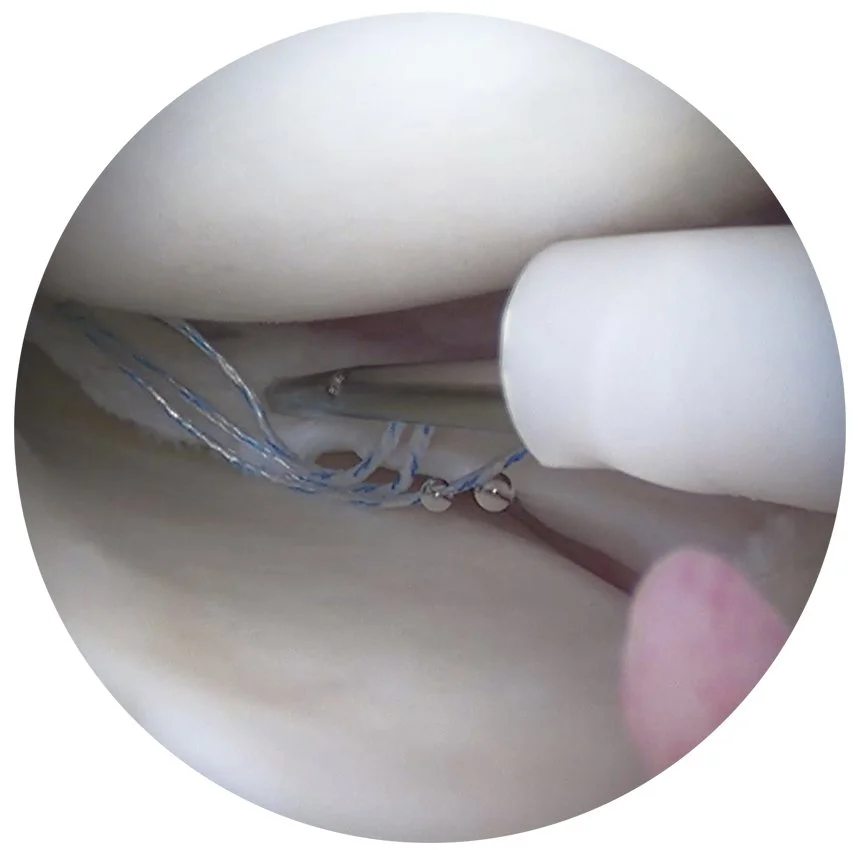
What does knee arthroscopy involve?
The procedure is usually performed under a general anaesthetic.
Two small incisions are made at the front of the knee.
A tiny camera is inserted to inspect the joint and guide treatment.
Depending on findings, treatment may include trimming or repairing a meniscus tear, removing loose bodies, smoothing rough cartilage, or other repairs.
Most procedures take 30–60 minutes, and you usually go home the same day.
What will the recovery be like after surgery?
You can usually walk the same day, sometimes using crutches for a few days.
Swelling and discomfort are common for the first 1–2 weeks.
Physiotherapy exercises are important to restore movement and strength.
Most patients return to office-based work within 1–2 weeks and to more physical jobs or sports within 4–6 weeks, depending on the procedure.
Full recovery may take longer if a meniscal repair or more complex procedure is performed.
What are the risks of surgery?
All operations carry risks. Specific risks of knee arthroscopy include:
Swelling and stiffness of the knee
Bleeding inside the joint (haemarthrosis)
Infection (<1%)
Blood clots (deep vein thrombosis)
Numbness around small scars
Rarely, further surgery may be needed if symptoms persist
Are there alternatives to surgery?
Alternatives depend on the underlying problem and may include:
Physiotherapy to strengthen and stabilise the knee
Anti-inflammatory medication and pain relief
Activity modification
Injections (steroid or hyaluronic acid) for pain and swelling
Watchful waiting, as some minor meniscus tears and symptoms may improve over time