KNEE SURGERY GLASGOW
Robotic Assisted Joint Replacement
What is a robotic assisted joint replacement?
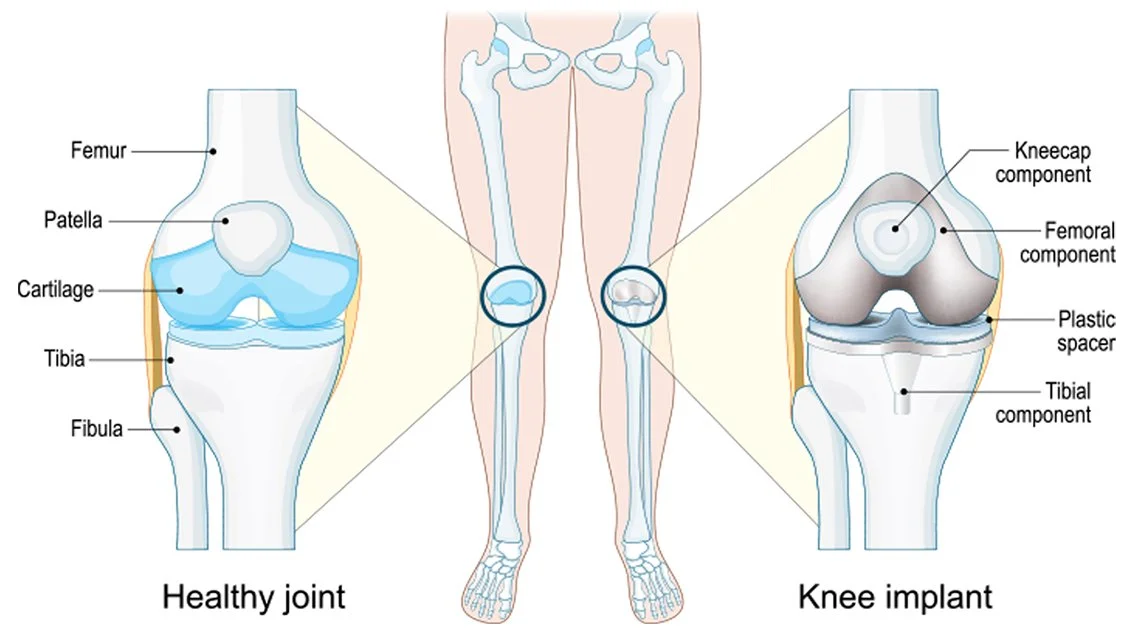
A robotic-assisted knee replacement is an advanced surgical technique that uses the MAKO® robotic system to help your surgeon perform either a partial or total knee replacement with greater precision.
The robot does not replace the surgeon — instead, it assists in planning and guiding the surgery, ensuring accurate positioning of implants tailored to your individual anatomy.
Why might I need a robotic assisted knee replacement?
You may be offered a robotic-assisted knee replacement if:
You have severe knee pain caused by arthritis or cartilage damage
Your symptoms interfere with walking, climbing stairs, or daily activities
Non-surgical treatments (physiotherapy, medication, injections) have not provided relief
X-rays show advanced arthritis in part or all of the knee
Robotic-assisted surgery can be used for both:
Partial knee replacement – replacing only the damaged part of the joint (often inner, outer, or kneecap area)
Total knee replacement – replacing the whole knee joint when arthritis affects multiple compartments

What does robotic assisted knee replacement surgery involve?
Before surgery, a CT scan of your knee is taken to create a 3D model of your joint.
Using this model, the surgeon plans the size, position, and alignment of the implants.
During surgery, the MAKO® robotic arm helps guide bone preparation and implant placement with exceptional accuracy.
The surgeon remains in full control at all times but benefits from enhanced precision and real-time feedback.
The operation usually takes 1–2 hours, and most patients stay in hospital for 1–3 days.
What will the recovery be like after surgery?
Recovery after robotic-assisted replacement is similar to standard knee replacement, but the precision of implant positioning may lead to:
Less pain and swelling in the early stages
A quicker return to walking and daily activities
Improved function and more “natural-feeling” movement long term
Typical recovery:
Walking with support (frame or crutches) from day one
Driving usually after 6 weeks (depending on progress)
Full recovery 3–6 months, though improvements can continue up to a year
Physiotherapy is essential throughout recovery to regain movement, strength, and confidence.
What are the risks of surgery?
All surgery carries some risks. These include:
Pain, swelling, and stiffness
Infection (<1%)
Blood clots (deep vein thrombosis or pulmonary embolism)
Implant wear or loosening over time
Numbness around the scar
Very rare: nerve or blood vessel injury
Robotic-assisted surgery aims to reduce certain risks (such as malalignment of implants) by improving accuracy, but the general risks of knee replacement remain.
Are there alternatives to surgery?
Alternatives include:
Non-surgical management: physiotherapy, medications, weight management, and injections
Conventional knee replacement: performed without robotic assistance, still highly successful and widely used
Partial knee replacement without robotics: suitable in some cases but may not offer the same precision planning as robotic-assisted methods