KNEE SURGERY GLASGOW
Meniscus Repair
What is a meniscal repair?
The meniscus is a C-shaped piece of cartilage in the knee that acts as a cushion and helps with stability. Tears of the meniscus are common, especially after twisting injuries.
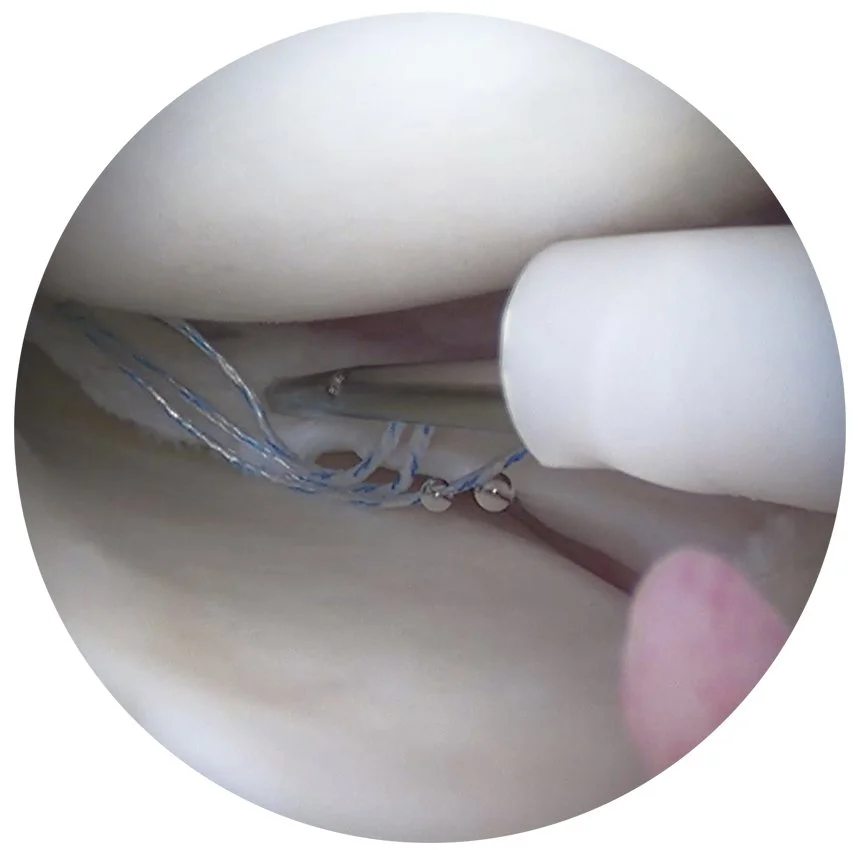
A meniscal repair is an operation where the torn edges of the meniscus are stitched back together to allow healing. Unlike removing the torn part (meniscectomy), a repair aims to preserve the cartilage, which is important for long-term knee health and reducing the risk of arthritis.
Why might I need a meniscal repair?
You may be offered meniscal repair if:
You have a meniscus tear that causes pain, swelling, or locking of the knee
The tear is in a part of the meniscus with good blood supply, where healing is possible
You are young or active and want to preserve as much cartilage as possible
You are having another knee surgery at the same time (e.g. ACL reconstruction)
Not every meniscal tear can be repaired. Some tears may heal with rest and physiotherapy, and others may require removal of the damaged tissue instead.
What does meniscus surgery involve?
The procedure is usually performed under a general anaesthetic and takes around 30–60 minutes.
Small keyhole incisions (arthroscopy) are made around the knee.
A camera is used to see the meniscus and special instruments are used to place stitches that hold the tear together.
Dissolvable or permanent anchors may be used to keep the meniscus edges in place while they heal.
Most patients go home the same day.
What are the risks of surgery?
All operations carry some risks. Specific risks of meniscal repair include:
Pain, swelling, or stiffness in the knee
Infection (rare, <1%)
Blood clots (deep vein thrombosis)
The repair not healing, which may require further surgery
Ongoing symptoms of catching or locking
Numbness around the scar
Are there alternatives to surgery?
Not all meniscus tears require repair. Alternatives include:
Physiotherapy and rehabilitation: strengthening and stability training, which may improve symptoms for some tears.
Activity modification: avoiding twisting or pivoting movements that aggravate the knee.
Arthroscopic partial meniscectomy: removal of the torn piece of cartilage if it cannot be repaired.
Preserving the meniscus is always the preferred option if possible, as this gives the best chance of long-term knee health.
What will the recovery be like after surgery?
Rehabilitation after meniscal repair is more cautious than after simple meniscus trimming (meniscectomy), because the stitches need time to heal.
First 4–6 weeks:
You may need crutches and a knee brace to protect the repair.
Weight-bearing is often limited or partial.
Knee bending may be restricted at first.
6–12 weeks:
Gradual increase in movement and strengthening exercises.
Focus on quadriceps, hamstring, and hip strength.
3–6 months:
Progressive return to jogging, agility work, and sport-specific training.
Return to sport:
Usually 4–6 months, depending on healing, strength, and the type of sport.
Your physiotherapist and surgeon will guide your individual programme.